
This Sunday I am delighted to be returning to St Gabriel’s Church in Popley.
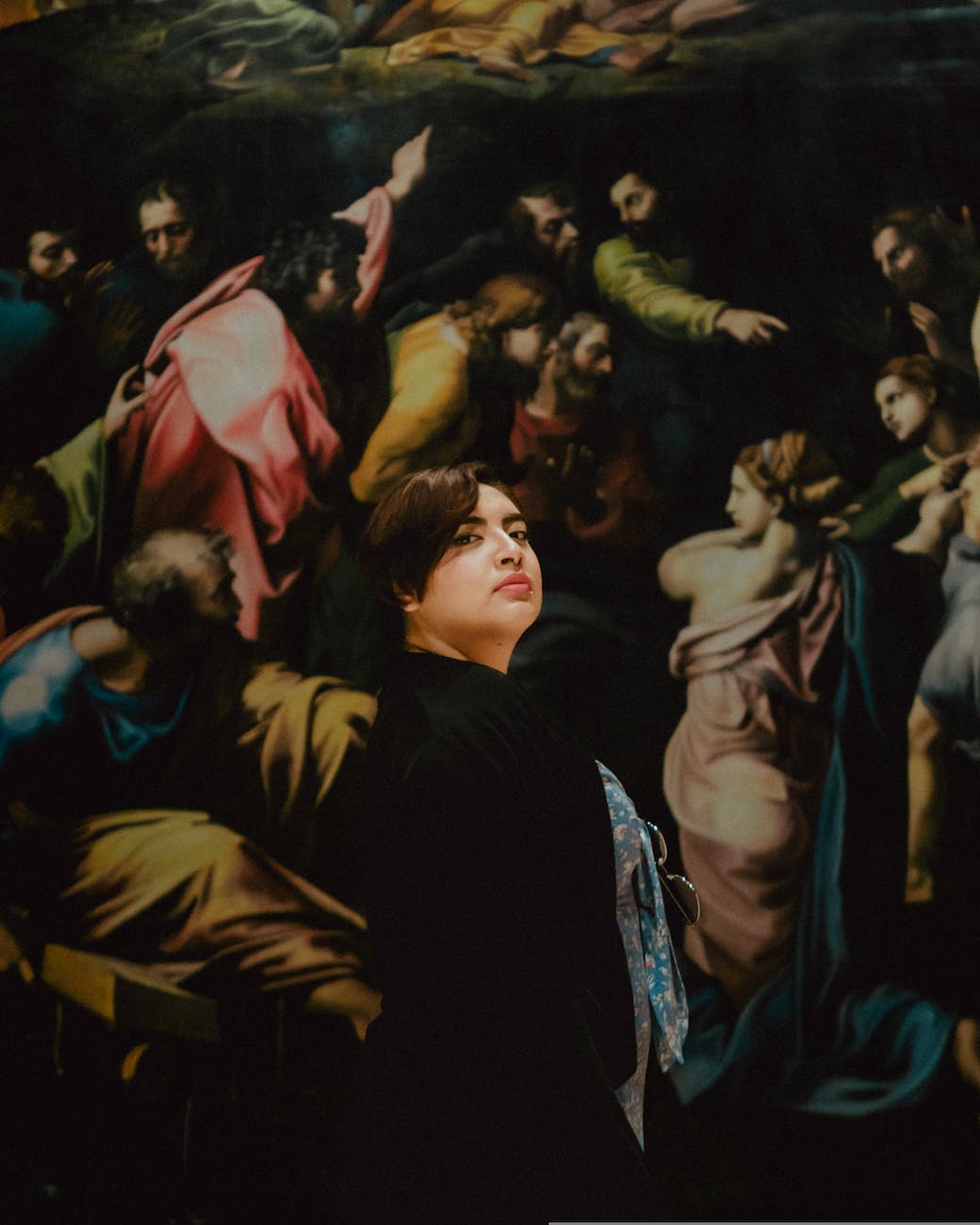
This Sunday, the Sunday before Lent, the lectionary gifts us with Mark’s account of the Transfiguration. It is a gift because it is jam packed full of beautiful images of Jesus. Jesus takes his closest friends, Peter, James, and John to climb a mountain: a great male bonding day out! However, when they reach the top of the mountain they are greeted not with a stunning view of lakes and vales, or even clouds and sunsets, but by Jesus revealed in all his glory. Jesus is transfigured, his clothes become dazzling white and Jesus himself is glowing.
What’s more, the three disciples are treated to a vision as has never been experienced before. Moses and Elijah are in their midst! Moses and Elijah the ultimate in the Law and the Prophets, who were so close to God that rather than dying they were taken straight to heaven at the end of their earthly lives. These two were the patriarchs of patriarchs, and their return expected to hail the presence of the Messiah. Here they are with Jesus! Jesus who claimed that he had come not to abolish the law and the prophets, but to fulfil them.
And as the disciples stand at the top of that mountainside, mouths wide open in disbelief, a voice is heard from heaven
This is my Son, the Beloved; listen to him!
Mark 9:7
If there had been any doubt in the disciples’ minds about who Jesus really is, then the voice of God is here (hear?) to settle those doubts. Jesus is God’s Son. This whole encounter comes just a week after Jesus asks his disciples who they think he is, and Peter proclaims that he is the Messiah; now Jesus confirms his claim with this mountaintop experience.
It is truly an awesome experience, in every sense of the word, but there is a question left niggling away at me: Where is Andrew?
Andrew was the first to proclaim that Jesus is the Messiah, long before his brother Peter does. Back when Andrew is a disciple of John the Baptist it is he who invites Peter to come and meet the Messiah he has just spent the afternoon having tea with.
Andrew, Simon Peter’s brother, first found his brother Simon and said to him, “we have found the Messiah”. He brought Simon to Jesus.
John 1:35-42
Time and again, though, we see Peter, James, and John, selected when Andrew is left behind. Just as James and John were brothers and fishing partners, so were Peter and Andrew, and the four of them were cousins. In other gospel accounts the four fishermen are called together, yet Jesus separates Andrew out, and I don’t know why.
There is perhaps an anomaly in that Andrew is a Greek name rather than the Hebrew names of his cousins. Andrew is, perhaps, identified as a gentile, as an outsider, and this is why he is left out of the inner circle; perhaps Andrew’s role is to be the one who hangs around the edges and welcomes in other outcasts?
Or perhaps Andrew isn’t up to the academic, the in-depth teaching which Jesus steals the other three away to engage in? Andrew is the one who wanders off when he should be mending nets with his brother, and yet instead of being reprimanded for doing so, he is indulged; unlike his brother Peter, there is no record of Andrew having married, started a family, grown up in the way the world expects him to; and perhaps it is telling that Andrew is the one to engage with the small boy who has a packed lunch to offer up at the feeding of the thousands. Perhaps this is something other than coincidence? Perhaps Andrew has a childhood innocence that the others have long grown out of?
I like this thought…. what if Jesus purposefully selected Andrew to be his first disciple, because he had Downs Syndrome? What if Jesus deliberately chose Andrew to be his disciple, someone no other rabbi (excepting John who was travelling ahead) would ever have even considered? What if Jesus, in his choice was showing just how ‘upside down’ the Kingdom of Heaven is compared with the Kingdom of Earth in all its fallenness? What if Jesus’ teaching to become like little children in order to enter the kingdom of heaven wasn’t simply aimed at those boys and girls under the age of seven, but was invoking Andrew as a role model, one who had never fully ‘matured’? What if the the person that Jesus seems to be excluding is actually the one he has been including in ways never before?
I am actually getting quite excited as I type these thoughts in black and white, because if Andrew does have Downs Syndrome, or any other learning difference, or ‘disability’ what is it that Jesus is saying? Andrew isn’t relegated or rejected or treated as disabled, he is the first among all the disciples; and if Andrew is not an outcast in Jesus’ eyes, who else might actually be considered a valued member of God’s kingdom, who has traditionally been considered ‘not good enough’?
Thankfully women are now, generally, acknowledged as being chosen by God for all roles according to gifts and calling as opposed to gender (although that isn’t true everywhere, or in all churches, and even in the C of E into which I was ordained, churches can still opt out of a bishop’s oversight if they happen to be female). It is widely recognised that people of all race and colour are called to be servants of God at every level, even if there is still some institutional racism to be dealt with. Where though are the people with disabilities? Where are our rainbow siblings from the LGBTQ+ community? So many are still left on the margins. So many who, like Andrew, have been called by Jesus.
Perhaps the key to understanding this Bible passage, this divine encounter afresh, is to look not at what is happening on the mountain top, but what is happening in the valleys; not who has been called to the inner circle, but who is hanging around on the margins waiting to be welcomed in.
Leave a Reply