
This Sunday I am preaching at my own parish church. This is the first time I will be doing so, having previously prayed intercessions, arranged flowers, and moved chairs. You will be very welcome to join me at St Paul’s Church, Andover for the 10am service with refreshments to follow,
I am so delighted to be celebrating Epiphany with you.
I wonder what your household Christmas traditions are? We have so many in our family, and I think that is in part because traditions help us tell the story. They tell the story of who we are as a family, and they hep us to tell the story of our faith. My children are pretty much grown now, the eldest is 19 and calls university ‘home’, the youngest is 17 and looking to do the same, but we still gather on Christmas Eve, receive new pyjamas, and read the children’s story book about the real St Nicholas before hanging our stockings in case something should fall into them. We have read the same story book every year since since they were born; indeed the book is so old it is no longer in print!
Our favourite traditions though, centre around Epiphany.
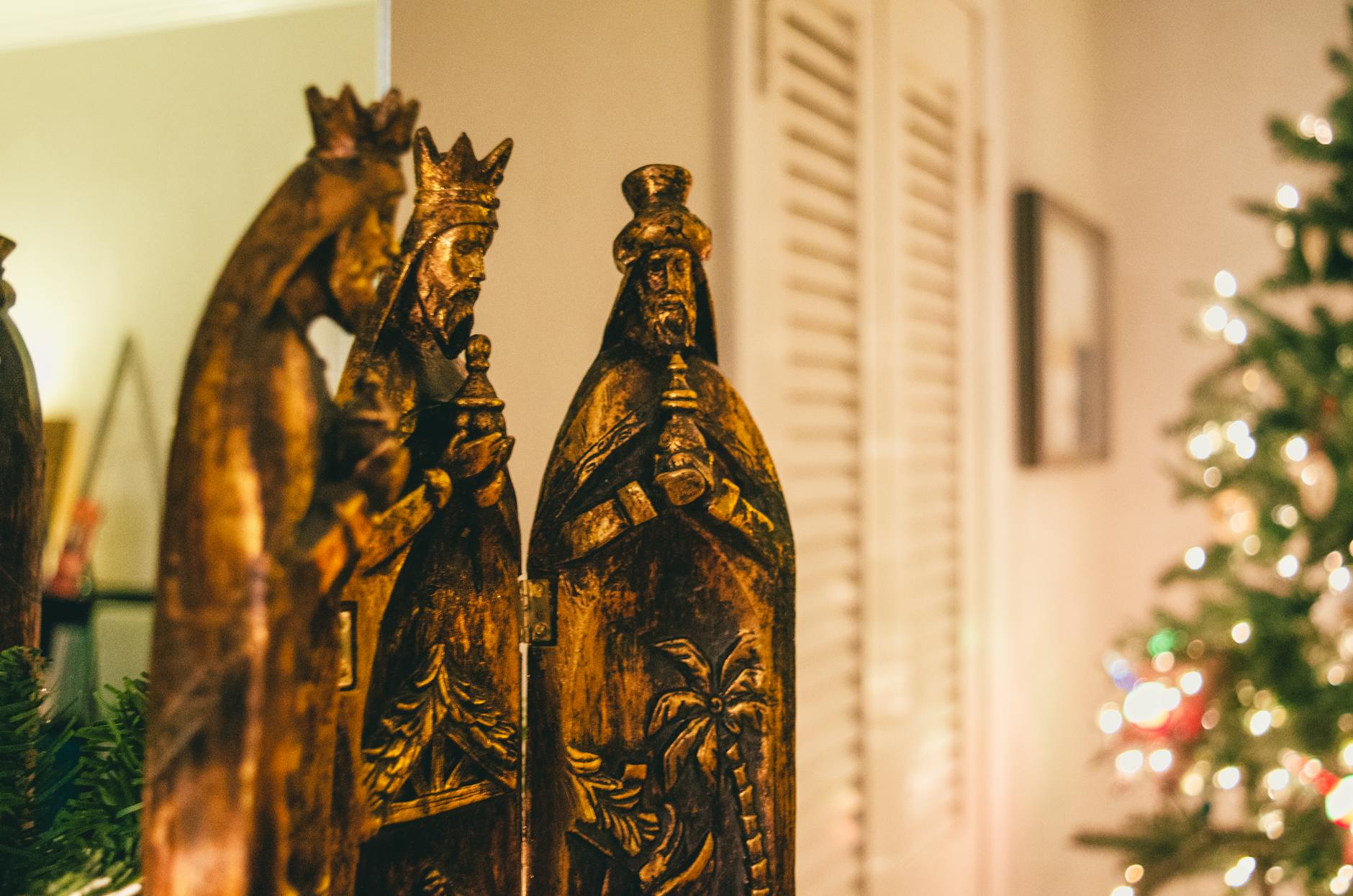
Like many Christian families our nativity set ‘travels’. We begin advent with a stable which houses a manger and an ox, shepherds and sheep are ensconced on the hillside (a house plant), the magi are no-where to be seen, whilst Mary and Joseph with their donkey begin their journey around the house. By Christmas Eve they have arrived, and at midnight Jesus is placed in the manger. Next to arrive for a brief visit are the shepherds (but the sheep stay on the hillside). Now, the magi begin their journey around the house as they make their way to the stable, arriving in time for Twelfth Night. Twelfth Night is traditionally the time for taking down the decorations, however we leave ours up for an extra day so that the Magi can enjoy their visit. Whilst the magi are visiting we enjoy an epiphany cake for breakfast and read through the story of the Magi, getting quite involved with acting out the angry king! Whoever finds the nut inside becomes king or queen for the day.
Whilst the children were at school the rest of the decorations would be taken down, leaving only the lights as a reminder that Jesus is the Light of the World, and a stable with an ox eating from his manger. Tucked away in the crib are tiny gifts, the last ones of Christmas, incense fills the air, and a golden trail shows where magi have been. The afternoon is spent searching for any decorations which may have fallen under the sofa or been forgotten, not wanting to leave any clues for angry King Herod to find in his search for Jesus.
This year the ‘children’ officially all become adults, they eat the cake but are less willing to search under the sofa. Gifts, though, are still welcome, and I am left pondering the gifts that the first magi brought.
There are cartoons which abound this time of year, Frankenstein’s monster makes an appearance in one! My favourite suggests that wise women might have brought more practical gifts for a new born and been helpful guests tidying up and cooking food.

So often when we think of the Magi we think of the gifts, gold, frankincense, myrrh. We joke about how impractical they would have been to a new born (although Jesus would have been a toddler by the time they followed the star to its destination). We consider their prophetic value, gold for a king, incense for a priest, myrrh to anoint his broken and lifeless body. These gifts, bizarre as they may seem now to a baby shower generation which delights in bestowing practical gifts on mums-to-be, were not only so much better gifts than a lamb or a ‘pa rum pa pa pum’ on the drum, or even random items thrown together, these were valuable treasures.
Then opening their treasure chests, they offered gifts of gold, frankincense, and myrrh.
Matthew 2: 11
I wonder what else was stored away in those treasure chests? What else might they have brought forth? Whether they knew it or not, the Magi gave to the holy family not just heavily symbolic gifts, but practical ones too.
Gold of course would have been vital currency for a family about to be sent into refugee status. They would have needed to provide for themselves away from home and Joseph’s business connections, they may have needed to offer bribes to keep them safe, or enable them to pass through borders. Frankincense, although often thought of as the incense which lifts prayers to heaven, can also be used in an oil form for many medicinal purposes. Perhaps this would have been the prefect first aid kit for a young family on the road? Likewise Myrrh has many healing properties especially in treating wounds and preventing infections, how practical for a young boy scraping his knees and his father, the carpenter, working with tools.
When we had our wonderful scratch nativity just before Christmas, it was clear to see that so much love and preparation had gone into the script and the costumes (especially the rather unique donkey), but the magi’s gifts seemed to have been improvised at the last minute (a pot of pencils anyone?). The oddity of the Magi’s gifts may seem as if they too randomly picked something from their treasure chests, and yet on both a spiritual and practical level, they gave the very best they could.
As we come before the manger today, the kings and queens that we are, what do we have to offer? Will we dig deep into our treasure chests for the very finest of gifts, or will we rummage through our ‘loose change’? Will we seek spiritual gifts or practical gifts, or perhaps gifts that are both? One of the gifts of others that I really value are those who serve on the tea rota: blessed are the teamakers! A gift of hospitality, of welcome, and a very much needed pick me up for clergy and other preachers who may have taken more than one service that day. Practical but also spiritual, serving others in the way that Jesus himself grew up to serve.
So what is the best that we have to offer? How often do we feel daunted that our gift or talent just isn’t good enough for God? How many of us feel imposter syndrome? How may of us stay in our seats too fearful of what we have to offer, whilst others, seeing a gap that needs to be filled, offer of themselves even though it isn’t their particular gift to give?
This year let us take courage, open up our treasure chests and see what we have to offer in worship and welcome.
To read the gospel passage in full, click here.
Leave a Reply