
This Sunday I am worshipping at Culm Davy Chapel and St Andrew’s Church in Clayhidon. These two are the smallest of the four churches in the Upper Culm Valley Mission Community, and exude ‘small but perfectly formed’. You are welcome to join me at Culm Davy at 9am for Prayer Book Holy Communion, or St Andrew’s for 10am contemporary Holy Communion with hymns.
We move away from parables of hell and damnation this week, and into the territory of miracles, much more fun! This is one of my favourite miracles, it involves a picnic and wise and generous children: what’s not to love? This is not Jesus’ first miracle, according to Matthew, whose gospel account we are studying this year. Jesus has already healed a leper, and a centurion’s servant, and Peter’s Mother-in-Law; he has stilled a storm, brought peace to the Gadarene beset with demons, and enabled a paralytic to walk again. Jesus has restored a girl to life, healed a woman of bleeding (and thus restoring her to a life worth living), healed not one but two blind men and one who couldn’t speak. Oh, did I mention the man with the withered hand? The disciples have been witness to all these miracles, and still they doubt.
What’s more, they themselves have been sent out with authority to cast out unclean spirits and heal the sick.
Today’s story comes as Jesus learns of hic cousin’s death: John the Baptist has been beheaded. Jesus, naturally is grieving. The life of a family member, one he shared his ministry with, had a spiritual connection with before either of them was born, has been brutally murdered, for being loyal to the kingdom of heaven. John lived his life for Jesus, but it didn’t see him set free from prison, it didn’t enable him to live to an old age. Jesus takes some time alone, away even from the disciples. Perhaps, at this point in time Jesus simple didn’t have the energy for their questions, their bickering, their doubts. Jesus ‘withdraws’ taking a boat on his own heading for a deserted place, planning to meet the twelve he had sent the long way round, by foot.
Of course, when Jesus gets to the deserted place it is no longer deserted. The crowds have come to him, to listen to him, to be cured of their illnesses, and of course Jesus stays and creates more miracles. Jesus looks at them with compassion and gives them what they need.
Enter the disciples: perhaps they are tired from walking the long way round, perhaps they are disgruntled that Jesus is not alone and they won’t get to have their special time with him. Perhaps they are also trying to process John’s death and are wondering what it will mean for them? Perhaps they need reassurance from Jesus?
Instead of finding Jesus rested and alone, in an oasis of Shalom, they discover that while they have spent the day walking in order to give him space, he has been surrounded by the hoi paloi! It is now evening, and the crowds show no intention of moving on. So they turn to Jesus, perhaps they think they are showing a kindness in advising Jesus to tell the people to go back home, or perhaps they are just trying to clear space for their own needs to be met. It backfires, Jesus tells them to sort it out themselves.
They need not go away, you give them something to eat.
Matthew 14: 16
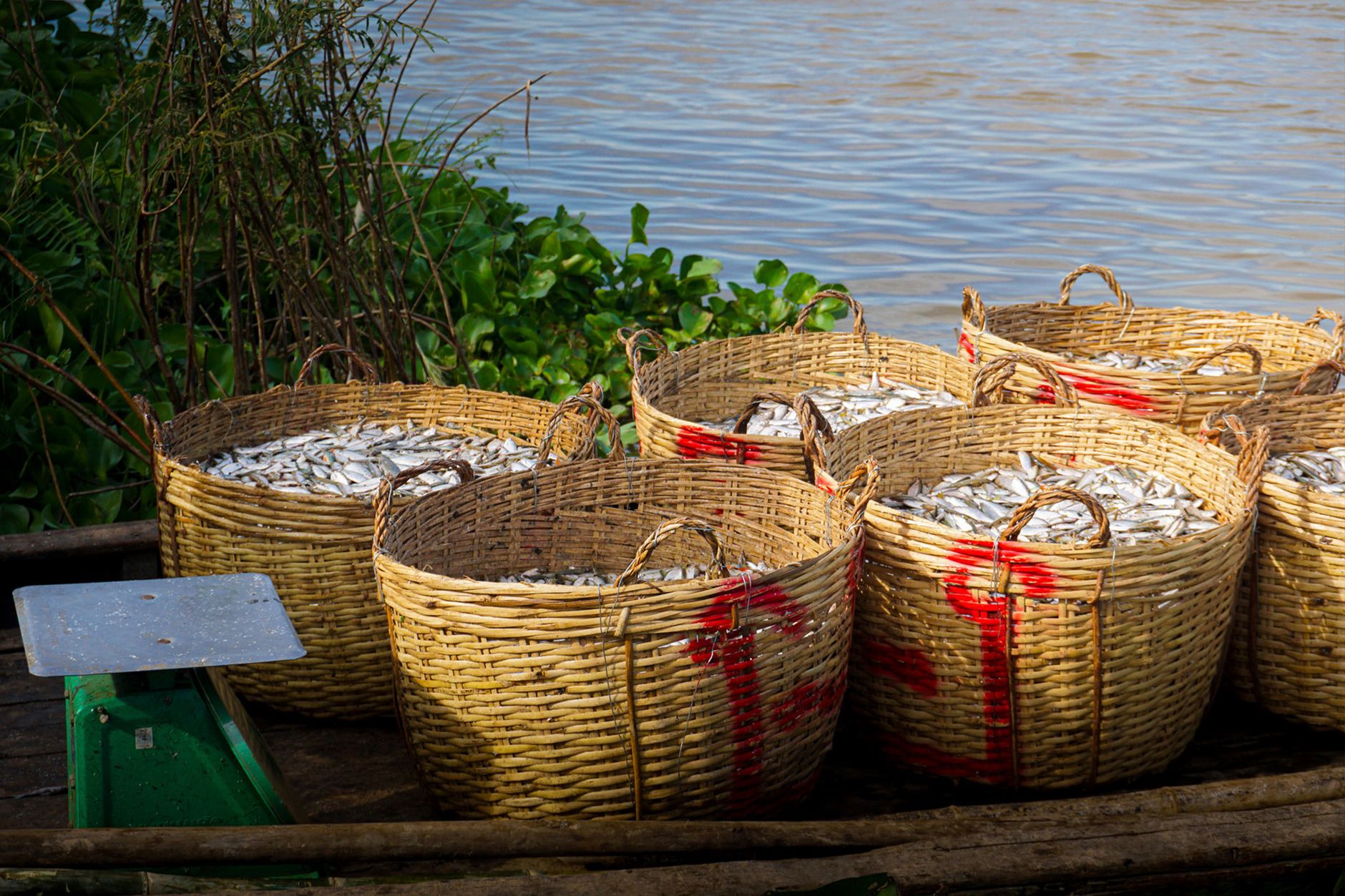
In Matthew’s retelling of the miracle we do not know who supplied the bread and fish, only in John’s account do we learn that Andrew discovers a boy with five barley loaves and two fish; we do know that the disciples cannot bring themselves to believe that these morsels are enough. The disciples do not yet believe that Jesus is enough.
And I wonder if that is where our faith has become stuck. We do believe in Jesus, we have committed to following him all our lives, but we just can’t believe that the little we have is enough. Perhaps this is particularly true of small rural parish churches? We want to ‘feed’ our neighbours, we want to see them fed with the bread of heaven, but there just isn’t enough to go round. We want to reach out to the families and do amazing fun things for them, but we just don’t have enough volunteers. We want to open up our churches, but that will take time and energy and finances that we just don’t have. So let’s tell them to go away.
The thing that strikes me is that the disciples aren’t instructed to do this from scratch, they already have bread and fish, which may not seem much, but is definitely something. So I am wondering what are our fishes and loaves? What are the seemingly small things within our gift which Jesus calls us to use to bless others with? What bread crumbs or fish fingers can you offer, which put together with someone else’s will amount to something more? I have heard it said that the real miracle was the willing child shaming others into sharing their food as he offered up his own, and discovering they had more than enough to go around, but I’m not buying it. The Jesus I follow is the Creator, the one who flung stars into space, who made the earth to bear plants and the sea to carry fish. We may not be able to multiply food, but Jesus can. Jesus takes the seemingly impossible and makes it possible. Jesus takes what we have and makes it more. Our response to this miracle story is not to lament what we don’t have, but to celebrate what we do have, and to trust God to make it enough for the purposes of his kingdom.
The question we should be asking is ‘what does God want from us here, in this place we have been called to?’ The question we should be asking is ‘what can we give?’ to make it happen. The question we should be asking is ‘how can we trust more fully in Jesus’ ability to create wonderful things out of seemingly nothing?’
The miraculous story doesn’t end with everyone being fed, it continues with so much food being left over that everyone present could take some home to share. The blessing didn’t stay in that one place, it travelled with those who had been fed.
Next time we feel Jesus nudging us to do something, instead of worrying about what we don’t have, let’s generously bring to Jesus what we do have, and trust him to do the rest.
You can read the full story here.
Leave a Reply